/ Interior
~ 4 min
Published: 23/12/2025
In the hands of a professional team, plants become a powerful spatial tool. They can define zones, influence the perception of light, and shape the emotional atmosphere of a home.
All-season winter garden — a timeless trend
When clients want to feel connected to nature year-round, we design indoor conservatories with panoramic glazing.
For a private residence in the Leningrad region, we designed and built a winter garden as the heart of the home. Its conceptual centerpiece is a young olive tree, specially brought from Italy. To ensure this Mediterranean guest thrives in a northern climate, we developed and installed an autonomous climate-controlled cube with a smart ecosystem, creating ideal conditions for growth and longevity.
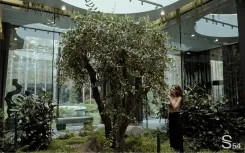

All engineering systems: automatic irrigation, lighting, ventilation, humidification, and dehumidification — are integrated into a smart home system. It maintains a perfectly balanced microclimate, independent of external conditions.
An entire team worked on the winter garden’s realization: Studia 54 ® engineers and architects, along with four landscaping crews. Inside, pathways made of architectural concrete were laid, garden stones and furniture were installed, and a complex drainage system was carefully engineered. The olive tree becomes a year-round reminder of the southern sun for the homeowners.
A place for privacy
A private garden can become a space for contemplation — a place to regain inner clarity and harmony with the world.
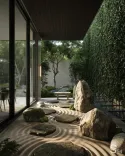
This year, a family practicing Zen Buddhism approached us. For their residence, we created two living sanctuaries: a Japanese garden and a koi pond.
For the Japanese garden, we chose a restrained composition of stones, “dry rivers,” and greenery. The waves traced in the sand symbolize the flow of time and the continuity of life, while the immovable boulders speak of eternity and stability. A carefully positioned stone bench invites one to pause, step away from daily distractions, and enter a meditative state. Every element here works to calm the mind — exactly as our clients envisioned.

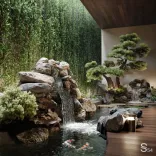
In this residence, the heart of the home is not the living room, but a koi pond with a bonsai tree. It is a place for unhurried walks and quiet contemplation.
In Eastern tradition, koi carp are deeply symbolic creatures, representing strength of spirit, perseverance on the path to one’s goals, and good fortune. Their slow, graceful movement through the water fills the space with a sense of balance and calm, turning simple observation into an active form of meditation.

A zoning instrument
Plants can be used to divide large spaces into distinct zones. A glass installation with greenery becomes an expressive zoning tool: it allows natural light to pass through while acting as a striking art object within the interior.
In our latest Dubai project, the client’s key request was the creation of a large-scale art piece that would serve as both a conceptual and visual focal point during formal dinners. It needed to be visible from multiple perspectives — from the dining area as well as from the second-floor gallery.
We designed a glass composition featuring two metal bowls from which dried amaranth cascades. At first glance, the installation reveals the image of a firebird suspended in mid-air, its wings spread wide.
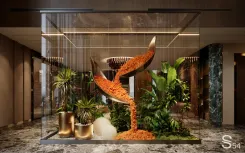

This luxurious art object functions as a zoning element within the dining area and becomes the central axis around which the entire evening unfolds.
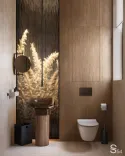
In our projects, you may also encounter dried florals placed inside glass columns. We favor this approach for its ability to subtly divide space, add a sense of airiness, and bring a feeling of summer into the interior — even in winter.

Plants as an extension of the concept
Of course, plants can also be used as decorative elements. The recognizable Studia 54 ® style is defined by a high level of detail — every interior is conceived down to the smallest nuance.
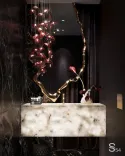
In Vietnam, the guest bathroom features an installation reminiscent of deep crimson calla lilies, becoming the visual centerpiece of the space and infusing it with refined elegance. As a continuation of the composition, we introduced live flowers. This precise accent evolves over time: buds open, petals fall, and a sense of movement appears within an otherwise static interior.

Artificial greenery as an alternative
Living plants require careful maintenance, and not every customer is ready to invest time and resources into ongoing care.
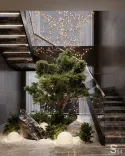
Our client in the Czech Republic admired conservatories and wanted a natural corner inside the home, yet asked for a solution that would remain flawless for decades with minimal effort. We proposed a year-round winter garden installation using artificial greenery. As a result, the residence gained a “living” green space with an evergreen tree that retains its freshness and beauty over time, without demanding constant attention.

Whether it is a self-sustaining ecosystem or an artificial garden, working with greenery is always about solving a specific design task: zoning, creating atmosphere, or expressing a philosophical idea. At Studia 54 ®, plants are never an afterthought — they are an integral part of the project, conceived at the very beginning, at the concept stage.