Sometimes the starting point of a project is quite bold color wishes. Taken together, such combinations may seem unusual or even controversial. However, in professional work, it is not the shade itself that becomes decisive, but its proportions, the proximity of materials, the work of light and textures. When the palette is structured systematically, even the most unexpected combinations sound harmonious and acquire nobility.
In a premium interior, this formula is complemented by the texture of materials, metal and light. As a result, a multi-layered system is formed, which can be called the color matrix of the premium space.
According to the Institute for Color Research, about 60-70% of the visual perception of space is formed by the basic colors of the interior. This pattern is consistent with the theory of color balance by Johannes Itten, described in the book The Art of Color, where the distribution of color masses is considered as the basis of harmony.
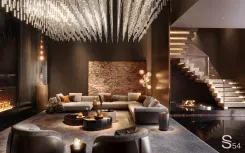

The basic color palette in the interior
It is based on the classical proportion:
60% — a neutral base;
30% — a rich natural shade;
10% — metallic or light accents.
The base layer forms a calm background and a sense of stability. Natural neutral shades are most often used: beige, cream, sand, smoky gray. They visually expand the space and reduce cognitive load.
Faber Birren noted in his book Color Psychology and Color Therapy that a neutral environment allows accents to be perceived more expressively and does not overload perception.
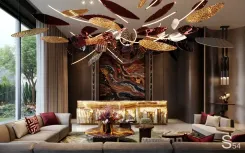
In one of our design projects in India, a warm onyx bar counter forms a striking visual accent in the lounge area. The neutral base makes the artistic element the center of the composition, and the burgundy accents in the decor create a color rhythm and visual unity.

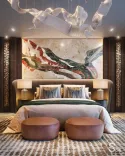
A similar principle works in a bedroom with a marble panel. The creamy background creates a sense of calm, against which olive and terracotta shades look deeper and richer.

Material structure and depth
The second layer of the color matrix is formed by materials. Walnut veneer, dark marble, graphite panels and natural stone create a harmonious composition and an atmosphere of quiet luxury.
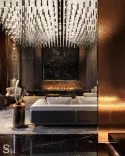
In our Jakarta project, the main color scheme is based on dark walnut and chocolate shades. The fireplace area enhances the feeling of intimacy, and the brass elements add reflected light and visual depth.
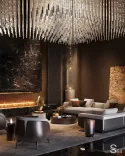

Black marble and warm wood create a dense material base. The contrast with light textiles enhances the sense of volume and scale of the space.

Emotional Color
Premium interiors always contain a complex emotional connotation. These can be cognac, terracotta, burgundy or emerald colors. They are perceived as more "expensive" because they are associated with natural materials: leather, wood, minerals.
Pantone Color Institute research confirms that deep natural shades evoke a sense of stability and status.
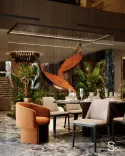
In the Dubai residence project, a warm orange accent becomes the center of the composition. It adds dynamics to a calm base of beige stone and dark wood.

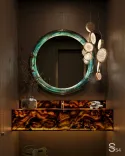
In the bathroom, this color combination continues: amber onyx, dark wood and emerald glass create an association with natural minerals. The green shade adds depth and enhances the sense of exclusivity.

Metal as a light amplifier
Metal elements create a luxurious effect due to the reflection and refraction of light. Brass, bronze, gold, and copper are most commonly used.
According to the Lighting Research Center, reflective surfaces increase the visual depth of a space and enhance light dynamics.
In the living room of the Calcutta project, dark walnut and cream textiles form a stable base, while copper enhances the warm palette, adding drama to the interior.
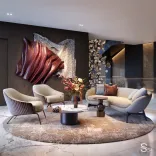

The velvet textiles contrast with the golden light accents. Due to this, the light becomes the compositional center of the space.
Light temperature
Premium interiors almost always use warm light in the range of 2700-3000K.
The recommendations of the Illuminating Engineering Society confirm that such a temperature enhances the perception of natural materials and creates a soft golden glow.
This principle is clearly visible in most Studia 54® projects. Warm light combines wood, stone and metal into a single composition and makes the space visually more complete.
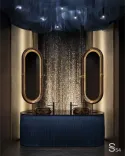
Combining warm and cold light sources is a subtle science and a challenge for any designer. For example, in this bathroom, the dark blue shade introduces a cool note and creates an atmosphere of a private spa space, while the golden elements and warm lighting maintain an overall sense of status.

The color matrix as a system
The color in Studia 54® projects is structured according to a clear system:
- a neutral architectural base creates sustainability
- material depth creates volume
- an emotional touch adds character
- metal enhances light
- the warm temperature unites the space
It is the interaction of these layers that forms the most restrained luxury that does not look demonstrative. When the color matrix is verified, the interior is built into a complete composition — statuesque, deep and timeless.
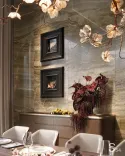

Successful color combinations for luxury interiors:

Beige + walnut wood + brass
Graphite + dark chocolate + cream textiles
Sand + terracotta + warm wood
Amber stone + dark walnut + soft beige
Burgundy + deep brown + gold metal
Emerald + cream + walnut wood
Gray stone + warm wood + brass accents
Dark graphite + black stone + warm lighting
Sand stone + amber onyx + chocolate wood
Beige + caramel + walnut tones