/ Architecture
~ 8 мин
Опубликовано: 30/06/2026
Luxury residential property values continue to rise, but market performance is increasingly determined by architectural quality, execution, and design vision rather than square footage alone. These factors play a decisive role in a property's long-term desirability and liquidity.
Let us examine five key trends that define the value and liquidity of premium real estate in 2026.


1. Architectural quality supersedes raw supply
The volume of premium residential inventory has increased in recent years, creating greater competition and raising buyer expectations regarding architecture, design, and execution. As a result, unique projects command greater attention, while properties lacking a distinctive concept gradually lose market appeal.
The market increasingly rewards quality-executed projects. This encompasses thoughtful architecture, superior interiors, and sophisticated engineering. Buyers evaluate a home as part of their lifestyle rather than merely a collection of square meters.
Architectural bureaus undertaking premium projects must avoid two extremes: creating residences that are either overly generic or so personalized that they lose universal appeal for future buyers. The most liquid projects successfully combine individuality with broad market resonance.


2. Interior design as a direct value driver
In 2026, buyers are increasingly unwilling to invest in extensive renovations after purchase. Demand continues to grow for comprehensive project delivery, in which an architectural bureau assumes responsibility for every stage of development — from concept design to interior architecture, furniture selection, and final styling.
The result is a seamless experience for the client and a residence ready for immediate occupancy.
Architecture and interior design directly influence sales velocity and long-term value retention. Investments in premium design have become investments in liquidity. Exceptional interiors significantly improve marketability and help transform a residence into a long-term asset.

3. Timeless architecture over transient trends
Natural materials, restrained color palettes, and finishes that age gracefully contribute far more to long-term value than short-lived trends. Bold aesthetic statements may appear impressive today but often lose relevance over time.
The architecture created by Studia 54 is rooted in timeless design principles. Many solutions implemented years ago remain highly relevant today. Achieving this level of longevity requires a deep understanding of global trends, cultural context, and the lifestyle expectations of future owners.
This philosophy is clearly reflected in Studia 54's international portfolio. In Hungary, a Japanese-inspired residence combines minimalist aesthetics with premium materials and advanced engineering solutions. These projects demonstrate that enduring architecture is built on contextual relevance rather than short-lived trends.
Residences that maintain their visual and functional relevance over time consistently achieve stronger market performance and higher valuations.


4. Functional design and privacy as liquidity foundations
Luxury real estate buyers primarily assess whether a home supports comfortable everyday living. Layouts must be logical and flexible, balancing formal entertaining areas with private family spaces. Technical rooms, storage areas, laundry facilities, and engineering systems should be integrated from the outset without compromising valuable living space.
Privacy remains one of the most important criteria in luxury residential design. The ability to maintain personal space even while household staff are present significantly influences a property's perceived value. Separate entrances, carefully planned service circulation, and clear zoning strategies improve both comfort and long-term liquidity.
These same principles can be seen in Studia 54's residence in Uzbekistan, where the spatial organization prioritizes privacy, carefully framed views, and a clear separation between public and private zones. Such planning solutions enhance everyday living while supporting the long-term value of the property.
These details rarely attract immediate attention, yet they fundamentally shape the perception of a truly premium residence.
Modern engineering infrastructure also plays an increasingly important role. Zoned climate control, advanced ventilation systems, water purification technologies, and intelligent security solutions contribute to comfort while reducing operational risks. Systems designed with future adaptability in mind significantly extend the property's lifecycle.


5. Landscape integration as a core design principle
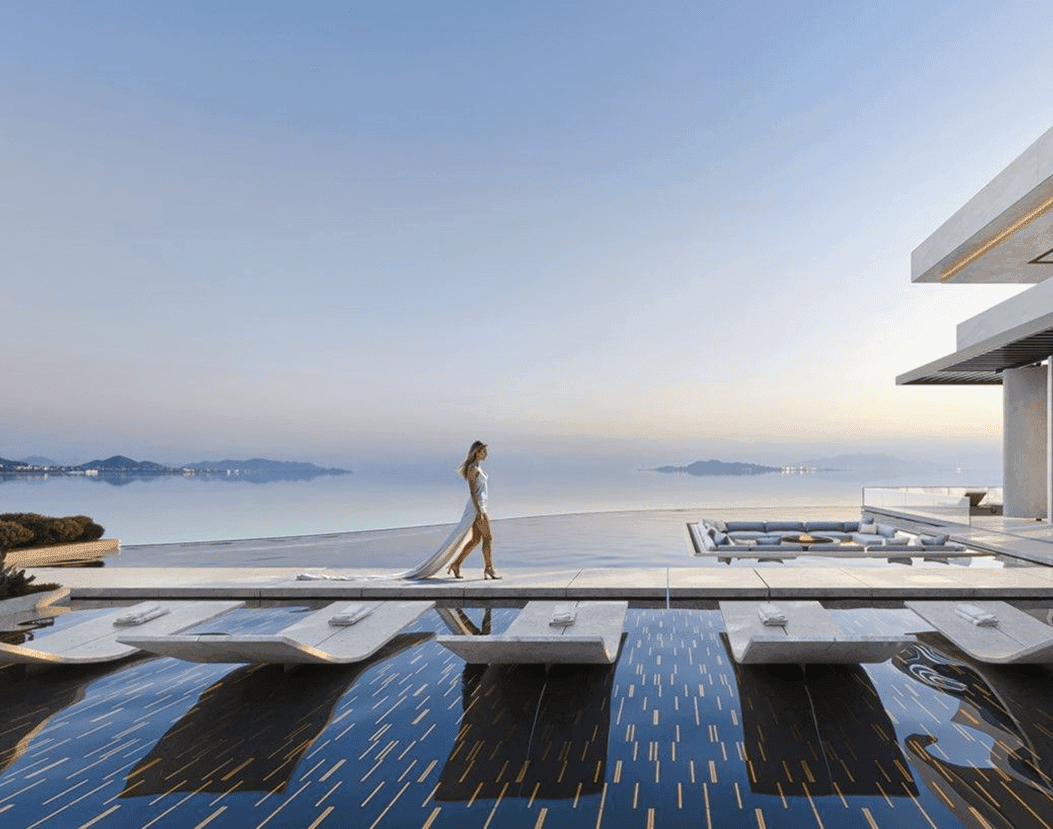
A residence should be viewed as an extension of its landscape. The architectural language associated with Studia 54 often incorporates elongated forms, sophisticated spatial compositions, double-height volumes, and material palettes that respond to the surrounding environment.
Across the studio's international projects, landscape is treated as an integral architectural component. In Vietnam, the residence is seamlessly connected to its tropical surroundings through open layouts, natural light, and a fluid transition between indoor and outdoor spaces. In Uzbekistan, the architectural composition is carefully oriented toward key landscape views, strengthening the relationship between the residence and its environment.
As available land in prestigious locations becomes increasingly scarce, opportunities for exceptional new developments become more limited.
Thoughtful landscaping, preserved natural topography, and strategically framed views significantly increase perceived property value. Landscape design must address both aesthetic and functional objectives, providing privacy, responding to site conditions, and integrating architecture into its natural context.


Why this matters for investment-minded owners
Luxury real estate in 2026 fulfills several roles simultaneously. It provides a comfortable environment for family life, adapts to evolving lifestyle needs, serves as a reflection of personal values and taste, and functions as a long-term asset.


Yet one principle remains unchanged: value is created not by square meters alone but by architectural vision, execution quality, and alignment with the owner's lifestyle. The most desirable properties are those that successfully combine timeless architecture, thoughtful planning, and exceptional design.
Owners who invest in these qualities create residences that remain relevant, desirable, and sought after for many years to come.
Questions:
Architectural quality, turnkey house design, timeless interior design, planning solution, thoughtful engineering are the top 5 factors that determine the value of premium housing in 2026.
Premium real estate from 500 sq m - where architecture, interior and landscape were created as a single system: with attention to privacy, functionality and long-term liquidity.
Yes, if the object is created with a focus on architectural quality and timeless design. Such residences retain and increase their value regardless of the market situation.